








Understanding Workout Mistakes
When starting a fitness journey, many people unknowingly make workout mistakes. These errors can slow progress, lead to injuries, and affect motivation. Understanding these common pitfalls is essential for anyone looking to improve their fitness. Mistakes can range from improper form to not following a structured program. In this article, we will explore these missteps in-depth and provide actionable advice to help you avoid them.
Identifying workout mistakes is the first step toward better training. Awareness allows individuals to adjust their routines effectively. Whether you are a beginner or a seasoned athlete, knowing what to avoid is important. Let’s dive into the most frequent workout mistakes and how to steer clear of them.
Poor Form and Technique
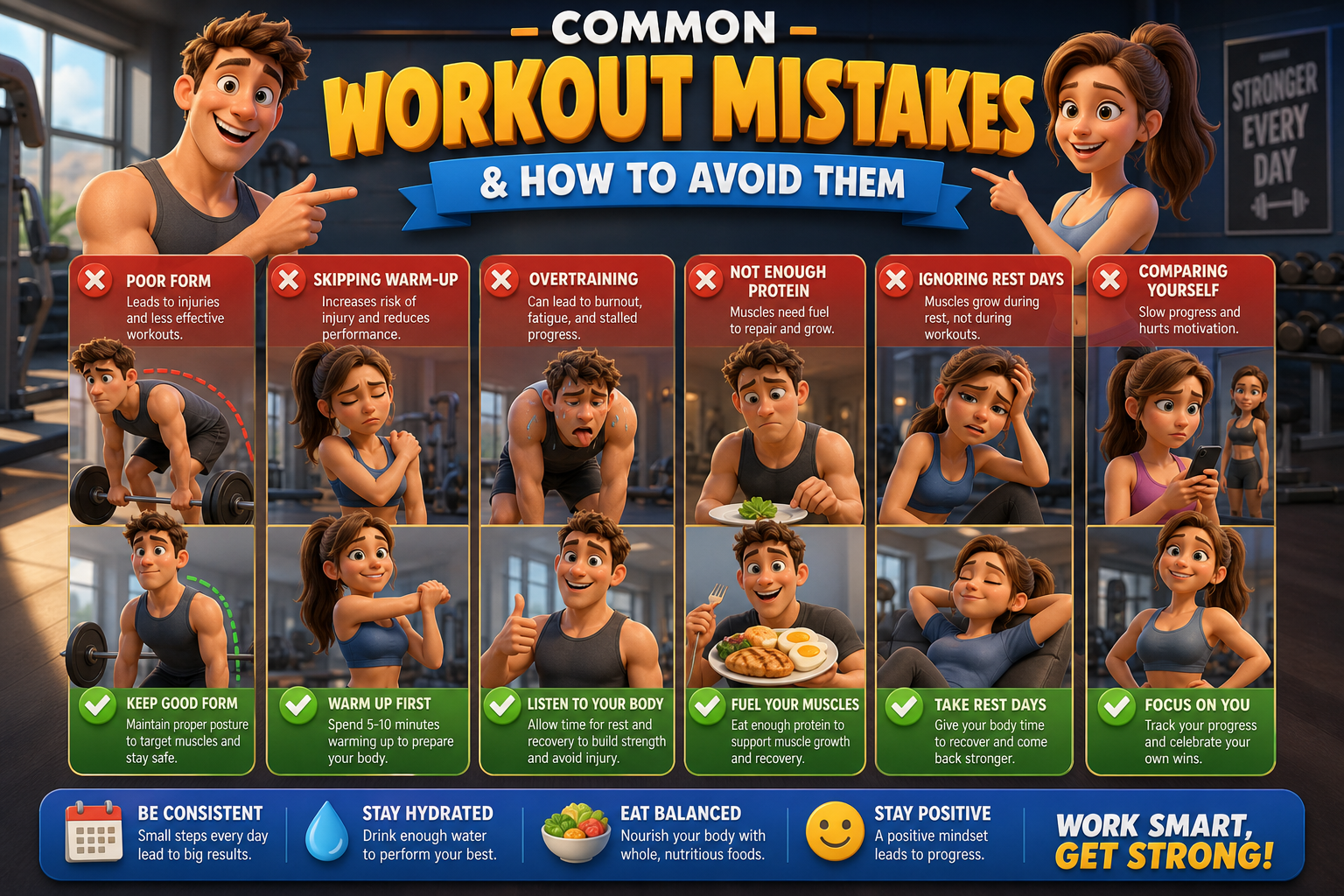
One of the most common workout mistakes is using poor form and technique. Many people rush through exercises, focusing on the number of reps instead of how they perform each one. This can lead to injuries and ineffective workouts. For example, during squats, improper knee alignment can cause strain on the joints.
To avoid this mistake, take time to learn the correct form for each exercise. Consider working with a fitness trainer or using online resources to watch detailed tutorials. Start with lighter weights to practice your technique. Once you feel confident, gradually increase the weight while maintaining proper form. Another helpful tip is to use mirrors or record yourself to assess your posture and movements.
Skipping Warm-Ups
Many people skip warm-ups, thinking they are unnecessary. However, this is a significant workout mistake. Warm-ups prepare your body for exercise by increasing blood flow to the muscles, enhancing flexibility, and reducing the risk of injury. Without a proper warm-up, you may strain muscles during your workout.
To incorporate effective warm-ups, spend at least 5 to 10 minutes doing dynamic stretches or light cardio before your main workout. Activities like jogging in place, arm circles, and leg swings are great options. This simple addition to your routine can improve performance and help you avoid injuries.
Neglecting Recovery
Recovery is often overlooked in fitness routines. Many individuals believe that more exercise equals better results. However, neglecting recovery can lead to burnout and injuries. Your muscles need time to repair and grow stronger after workouts. Training without adequate recovery can lead to fatigue and decreased performance.
To avoid this mistake, schedule regular rest days into your workout routine. Listen to your body and give it time to recover, especially after intense sessions. Incorporate light activities, such as walking or yoga, on recovery days to stay active without straining your muscles. Hydration and nutrition also play a vital role in recovery, so drink plenty of water and consume balanced meals.
Ignoring Nutrition
Nutrition is a critical component of any fitness journey. Many people make the mistake of ignoring their diet while focusing solely on workouts. Poor nutrition can hinder progress and affect energy levels. For instance, skipping meals or relying on unhealthy snacks can significantly impact workout performance.
To fuel your body properly, prioritize a balanced diet rich in whole foods, including vegetables, lean proteins, whole grains, and healthy fats. Meal prepping can help you stay on track and avoid unhealthy choices. Additionally, consider consulting a nutritionist for personalized advice based on your fitness goals. Remember, nutrition and exercise go hand in hand for optimal results.
Overtraining
Overtraining is a common mistake that occurs when individuals push themselves too hard without allowing for adequate rest. This can lead to fatigue, decreased performance, and injuries. Some signs of overtraining include persistent muscle soreness, irritability, and lack of motivation.
To avoid overtraining, create a balanced workout schedule that includes a mix of strength training, cardio, and rest days. Be mindful of your body’s signals and adjust your routine if you feel overly tired. It is better to have a consistent workout plan with proper rest than to push your limits and risk injury.
Setting Unrealistic Goals
Setting unrealistic fitness goals is another common mistake. Many individuals expect rapid results, leading to disappointment and frustration. It is essential to set achievable and measurable goals that match your current fitness level.
Start by defining short-term and long-term goals. For example, instead of aiming to lose 20 pounds in a month, focus on losing 1 to 2 pounds per week. Track your progress and celebrate small victories along the way. This approach will keep you motivated and help you stay on the right path toward your larger goals.
Focusing Solely on Cardio
Many people believe that cardio is the best way to lose weight, leading to the mistake of focusing solely on cardiovascular exercises. While cardio is essential for heart health, it should not be the only part of your routine. Neglecting strength training can result in muscle loss and a slower metabolism.
To create a balanced workout routine, incorporate both cardio and strength training exercises. Aim for at least two to three days of strength training each week, focusing on major muscle groups. This combination will help you build muscle, boost metabolism, and improve overall health. Consider activities like weight lifting, resistance bands, or bodyweight exercises.
Not Tracking Progress
Failing to track progress is another common mistake in fitness. Without tracking, it becomes challenging to see improvements and stay motivated. Many people go through workouts without noting their performance, which can lead to stagnation.
To avoid this mistake, keep a workout journal or use fitness apps to log your exercises, weights, and repetitions. Regularly reviewing your progress can help you identify areas for improvement and set new goals. Tracking also allows you to celebrate achievements, reinforcing your commitment to your fitness journey.
Skipping Hydration
Hydration is often underestimated in fitness routines. Many individuals forget to drink enough water before, during, and after workouts. Dehydration can lead to fatigue, decreased performance, and even serious health issues.
To avoid hydration mistakes, aim to drink water consistently throughout the day. A good rule of thumb is to drink at least half your body weight in ounces of water daily. For example, if you weigh 160 pounds, aim for 80 ounces of water. Additionally, consider drinking water during your workouts to stay hydrated and perform at your best.
Ignoring Mental Health
Finally, many people overlook the importance of mental health in their fitness journey. Stress and anxiety can impact motivation and performance. Failing to address mental well-being can lead to burnout or a negative relationship with exercise.
To support your mental health, incorporate activities that promote relaxation and mindfulness into your routine. Practices like yoga, meditation, or even simple breathing exercises can make a difference. Remember, fitness is not just about physical health; mental wellness is equally important for a balanced lifestyle.
Avoiding common workout mistakes is essential for achieving fitness goals. By focusing on proper form, incorporating warm-ups, and allowing for recovery, you can enhance your workouts. Nutrition, hydration, and mental health also play significant roles in your fitness journey. Set realistic goals, track your progress, and create a balanced routine for the best results. Remember, fitness is a journey, and each step you take brings you closer to your goals.
By implementing these strategies and remaining aware of common errors, you can create a more effective and enjoyable fitness experience. Stay committed, listen to your body, and celebrate your progress along the way.