







Understanding Fitness Progress
Tracking your fitness progress is essential for anyone looking to improve their health and achieve personal goals. Fitness progress refers to the measurable changes in your physical condition over time. This could be weight loss, muscle gain, improved endurance, or even increased flexibility. Understanding what fitness progress means for you can set the stage for your entire fitness journey. When you know what to look for, you can tailor your efforts to suit your specific needs. This could mean focusing on strength training or perhaps increasing your cardiovascular fitness. Taking time to define your goals clearly will help you stay motivated and focused.
Setting Clear Fitness Goals
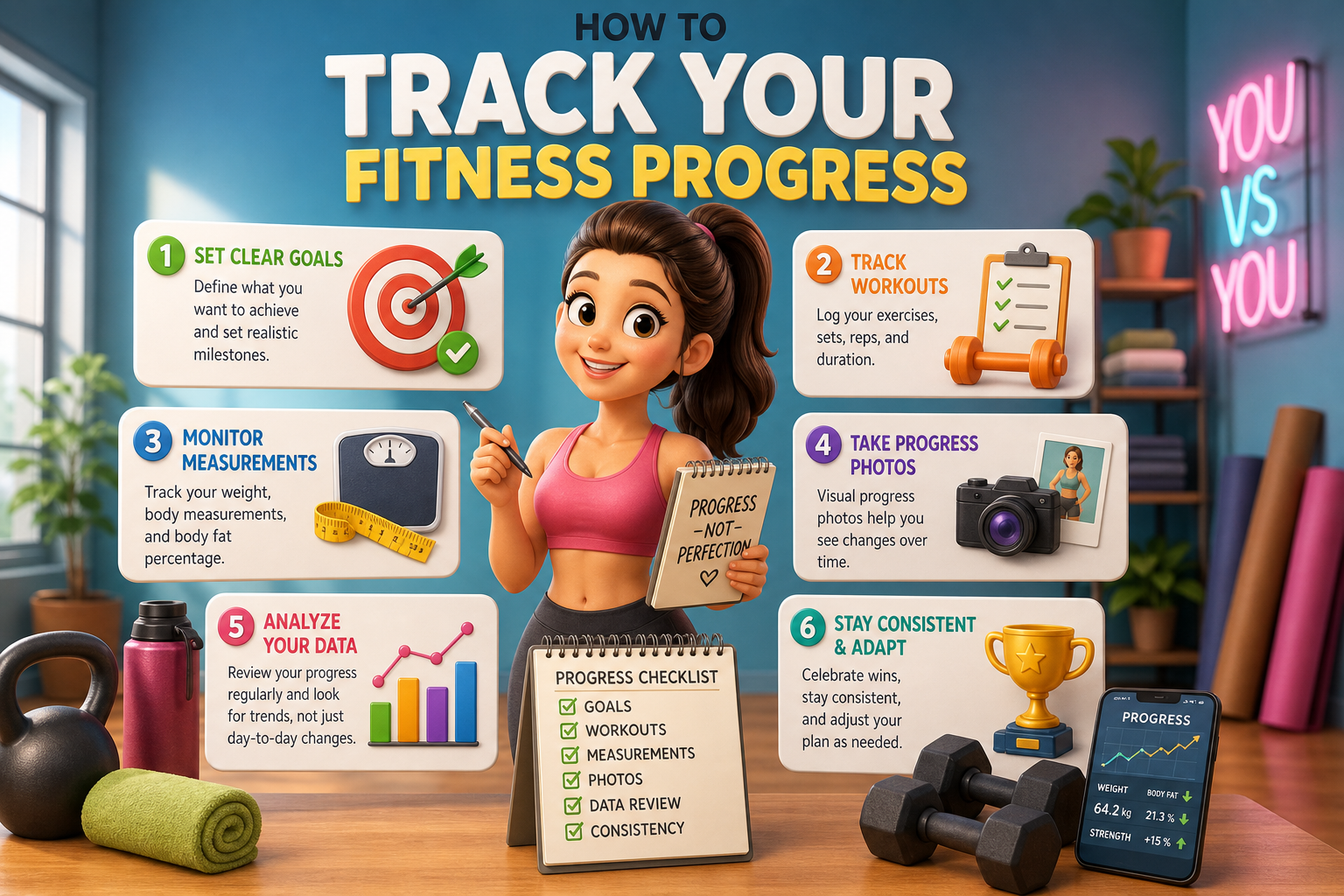
Setting clear and achievable fitness goals is the foundation of tracking your progress. Goals should be specific, measurable, attainable, relevant, and time-bound (SMART). For example, instead of saying, “I want to get fit,” you might say, “I want to run 5 kilometers in under 30 minutes in three months.” This goal is clear and gives you a timeline to work with. Once you have your goals set, write them down. Place them somewhere visible to remind yourself of your objectives. Periodically review and adjust these goals as needed. As you achieve smaller milestones, you will feel a sense of accomplishment that can boost your motivation.
Choosing the Right Tracking Tools
In 2026, there are many tools available to help you track your fitness progress. You can use apps on your smartphone, wearable fitness trackers, or even simple notebooks. Fitness apps like MyFitnessPal or Strava allow you to log workouts, monitor calories, and track your progress over time. Wearable devices like smartwatches or fitness bands can provide real-time data on your heart rate, steps, and sleep patterns. If you prefer a more traditional method, consider keeping a fitness journal. Write down your workouts, meals, and how you feel each day. This can provide valuable insights into your overall health.
Regularly Measuring Your Progress
It is important to measure your fitness progress regularly to see how far you have come. This might include weighing yourself weekly, taking body measurements, or recording your workout performances. For instance, if you are strength training, track the weights you lift and the number of repetitions. If your goal is to run faster, keep a log of your running times. Regular measurements will help you identify trends and see improvements. Also, make sure to take progress photos every month. This visual evidence can be very motivational, as it shows the changes in your body over time.
Listening to Your Body
As you track your fitness progress, it is essential to listen to your body. Your body gives feedback that can help you understand if you are pushing too hard or if you need to adjust your routine. Pay attention to how you feel during and after workouts. If you experience persistent pain or fatigue, it may be a sign to rest or modify your approach. On the other hand, if you feel stronger and more energetic, it is a good sign that your efforts are paying off. Ensuring you are in tune with your body’s signals can help you avoid injuries and maintain a sustainable fitness routine.
Staying Motivated Through Challenges
Tracking your fitness progress can sometimes be challenging. There may be days when you feel unmotivated or when results seem to stall. During these times, it helps to remind yourself why you started this journey. Revisit your goals and reflect on your achievements. Joining a community, whether online or in person, can provide support and encouragement. Share your struggles and victories with others who understand your journey. You may also consider finding a workout buddy to keep you accountable. Having someone to share the experience with can make working out more enjoyable and keep you motivated.
Adjusting Your Routine Based on Progress
As you track your fitness progress, be prepared to adjust your routine. If you consistently hit your goals, that may indicate it is time to raise the bar. For example, if you are easily completing your workouts or not feeling challenged, consider increasing the intensity or duration. Alternatively, if you find yourself struggling, it may be a sign to scale back and focus on recovery. Changing your routine can help prevent plateaus and keep your workouts fresh and exciting. Experiment with new exercises or training styles to see what works best for you.
Celebrating Your Achievements
Finally, do not forget to celebrate your achievements, no matter how small. Recognizing your hard work is vital for long-term motivation. Set up a reward system for yourself. For instance, after reaching a specific milestone, treat yourself to something nice, like new workout gear or a massage. Celebrating achievements can reinforce positive behavior and remind you of the progress you have made. Additionally, sharing your successes with friends and family can further enhance your motivation and inspire others to take on their fitness journeys.
In summary, tracking your fitness progress is a vital part of achieving your health goals. With clear goals, the right tools, and regular measurements, you can stay on course and remain motivated. Remember to listen to your body, celebrate your achievements, and adjust your routine as needed. By following these steps, you can ensure that your fitness journey is not only productive but also enjoyable.